Biofuels
Biofuels are not a fuel type but are a diverse group of fuel-products produced from biomass feedstock. Ethanol, methanol, methane (bio-LNG) or drop-in biofuels (including FAME and HVO) may be produced from a range of feedstocks, including crops, agricultural or forestry residues and waste biomass.

Technical seminar series
Visit our dedicated page for the full video recording and presentation slides from the Project’s one-day Technical seminar on marine biofuels
Biofuel products
This page provides general information on production of fuels from biomass, for detailed information about specific biofuels, you can find more on the pages dedicated to the appropriate fuel-type:
Biofuels production and distribution
Biofuels production methods
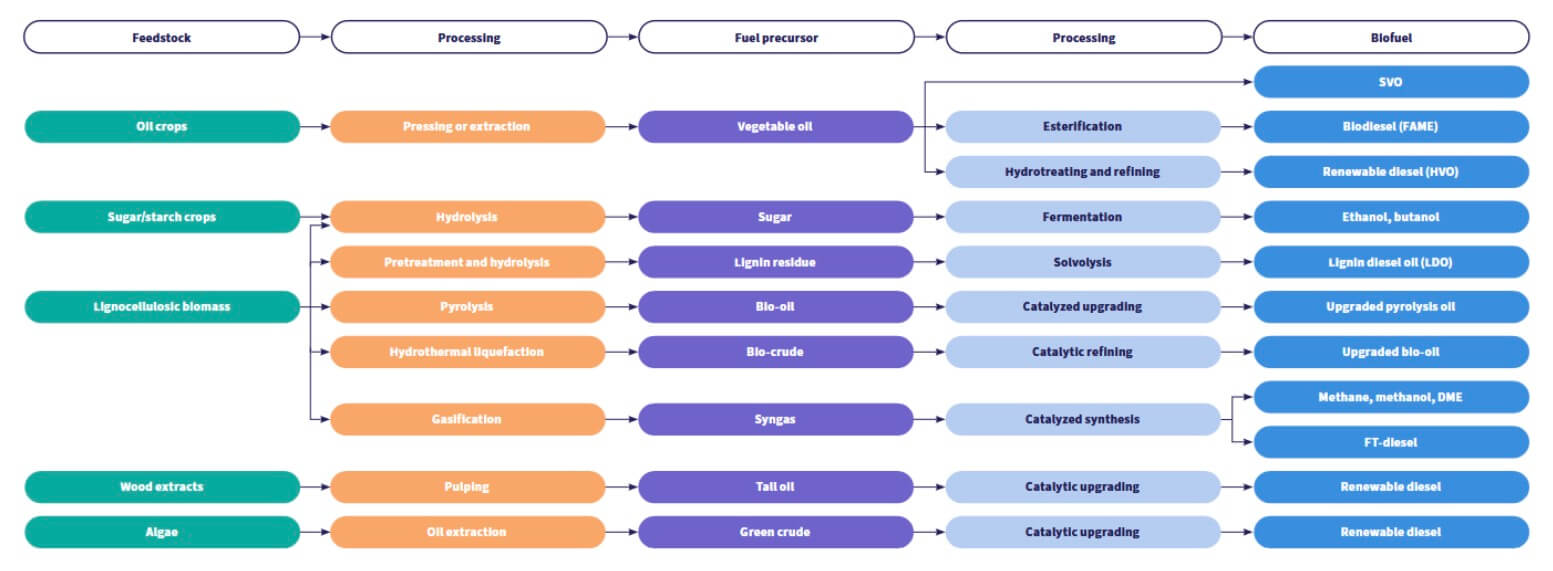
There are a wide range of biofuel production methods using various biomass feedstocks resulting in many distinct biofuel products, this chart gives an overview of the production process for some biofuels. See more about the production of common biofuels for marine use in LR’s Fuel for Thought: Biofuel report.
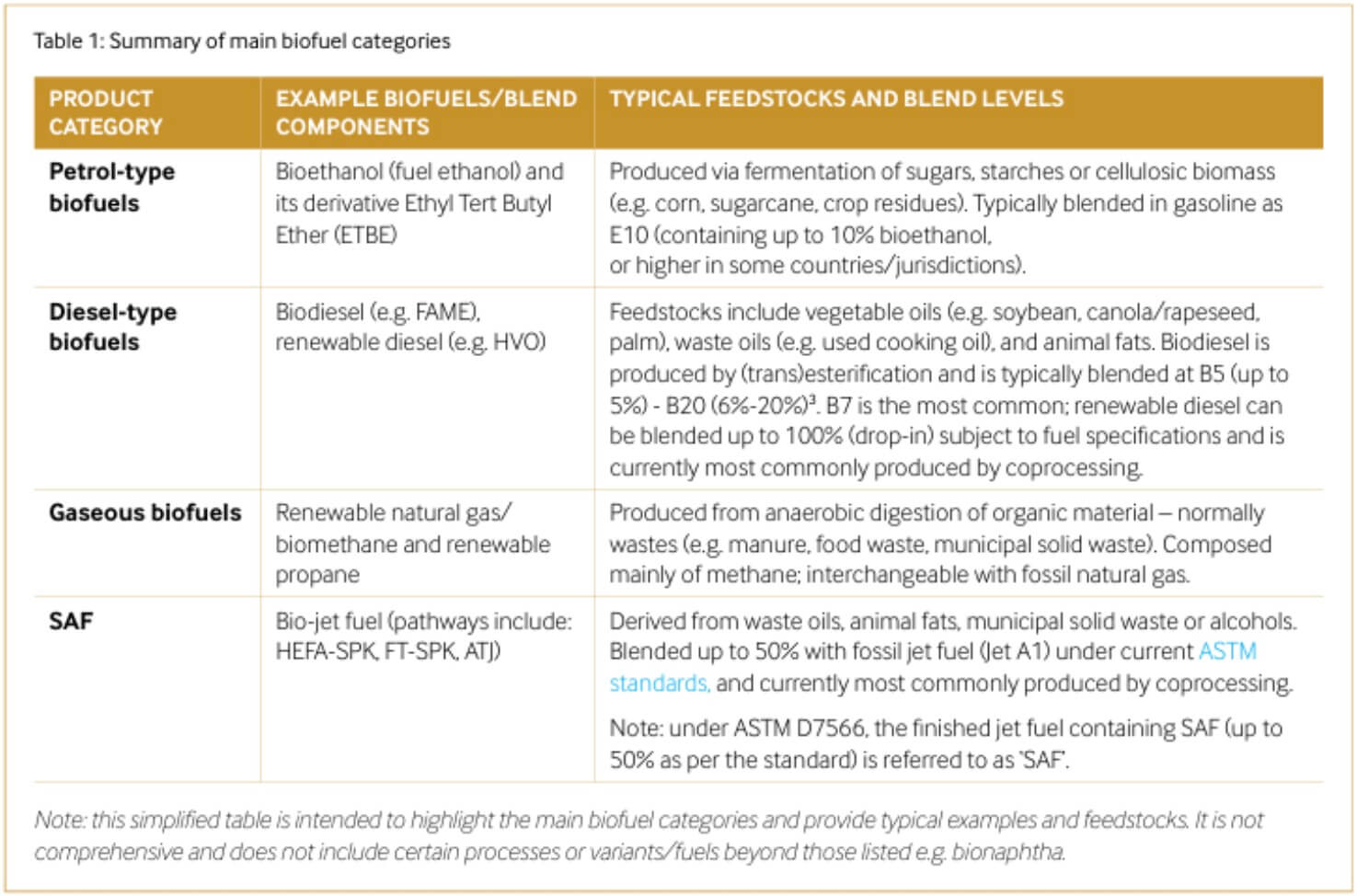
Read more on the Ipieca factsheet: Biofuels in the energy transition
Production of biofuels overview
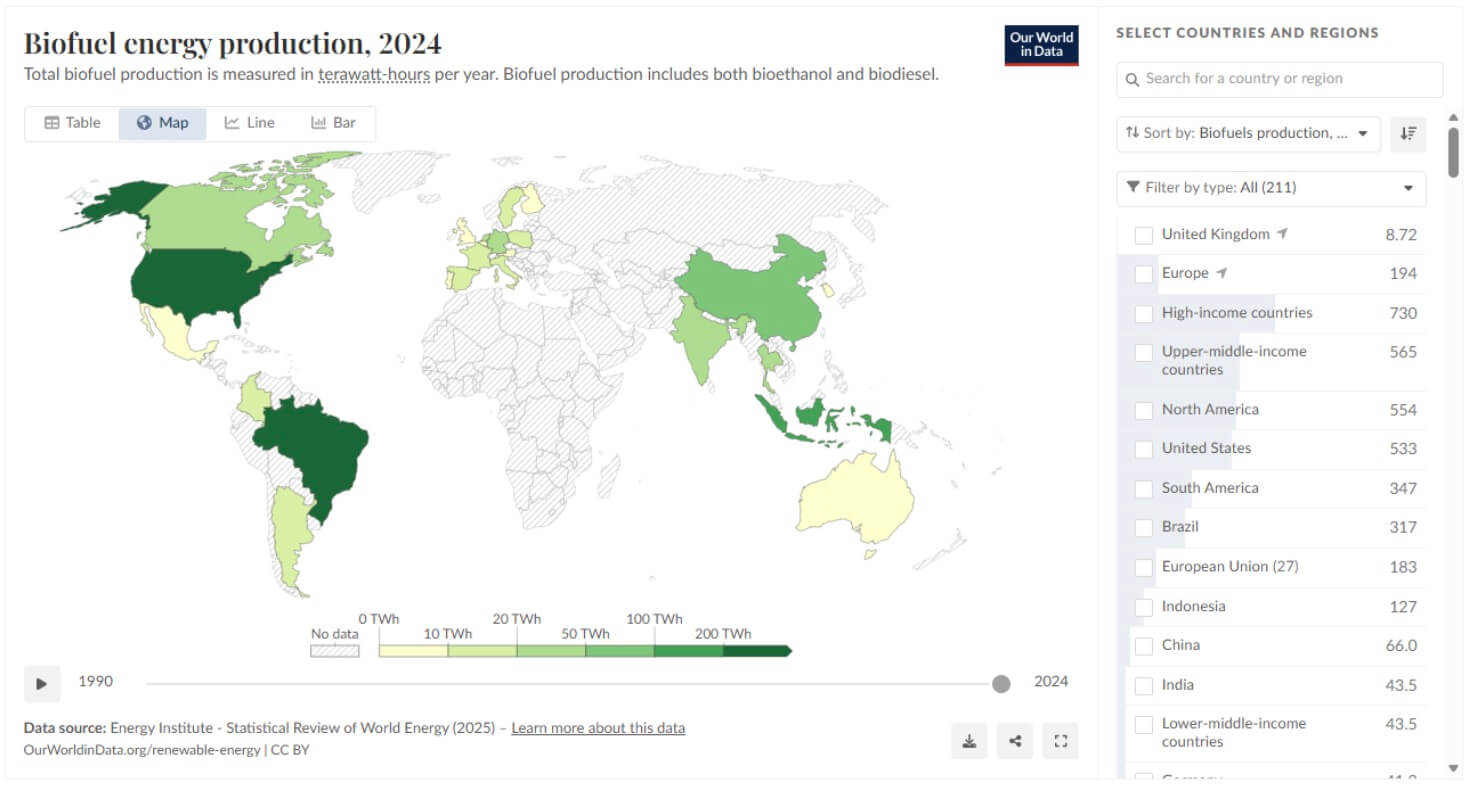
Biofuel energy production, 2024
(Our World in Data, CC attribution licence)
Adoption of biofuels blending
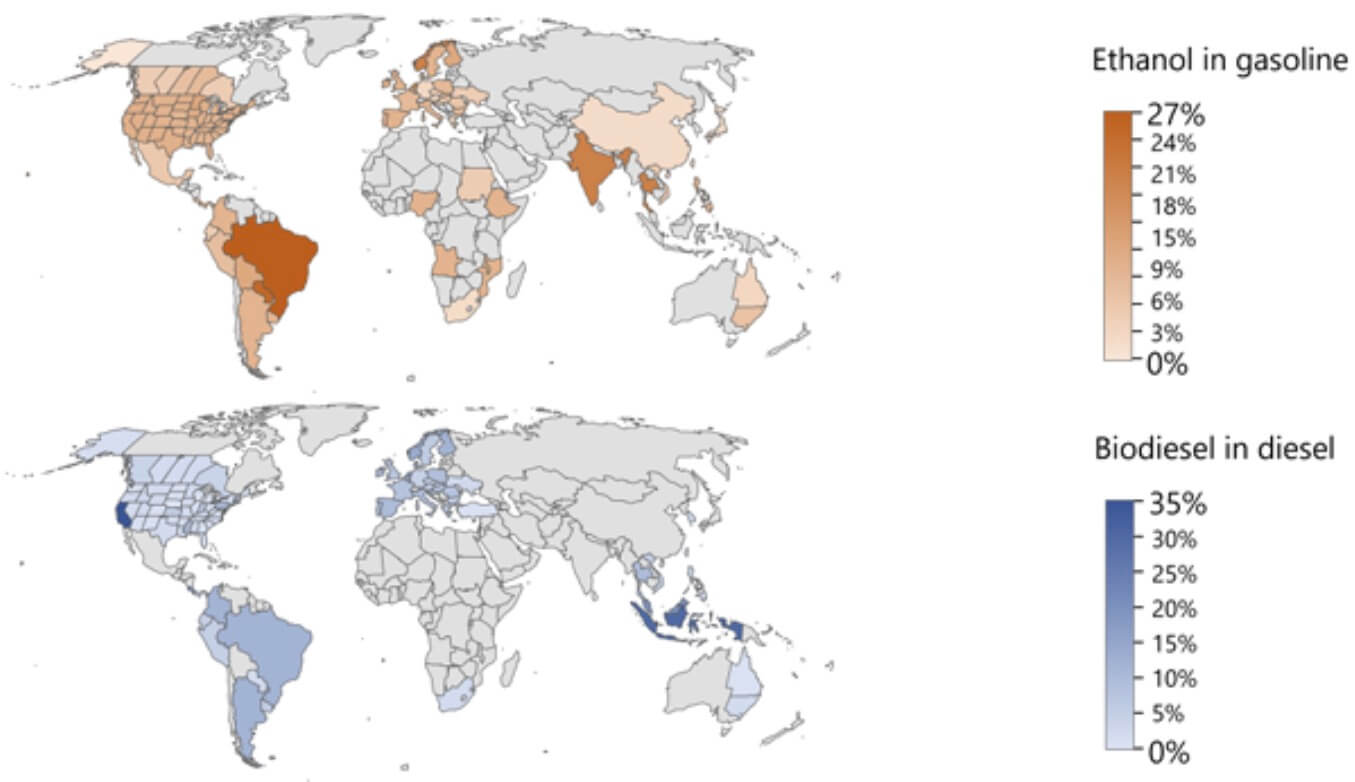
Biofuel energy production, 2024
(Our World in Data, CC attribution licence)
Conventional biofuels
Conventional biofuels feedstock can consist of sugars, starches, oil bearing crops, and animal fats. Often characterized by either an ability to blend with petroleum-based fuels, or for use within existing alternative fuel systems.
Advanced biofuels
Advanced biofuels use pre-commercial technologies to process alternative feedstocks into fuel, including waste materials, stalks of wheat and corn, wood and dedicated energy crops.
Synthetic biofuels can be considered a sub-category of advanced biofuels, which can be synthesized from gases made by thermal gasification of biomass.
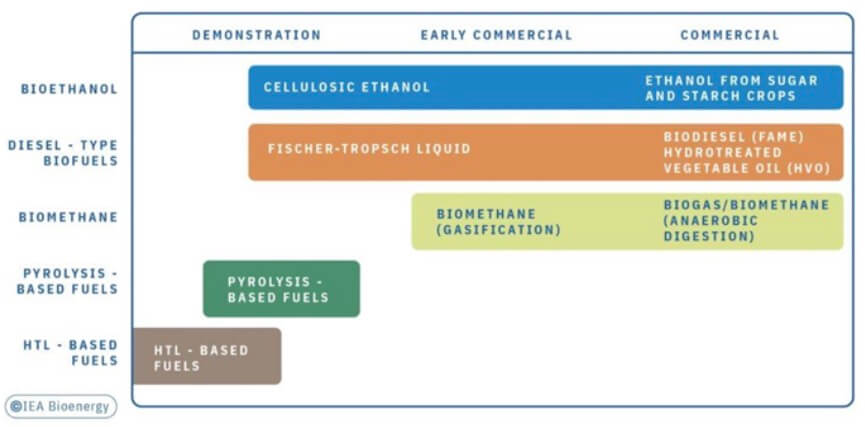
Read more in the IEA Bioenergy Task 39 report: Development and Deployment of advanced biofuel demonstration facilities 2024
Production of advanced biofuels
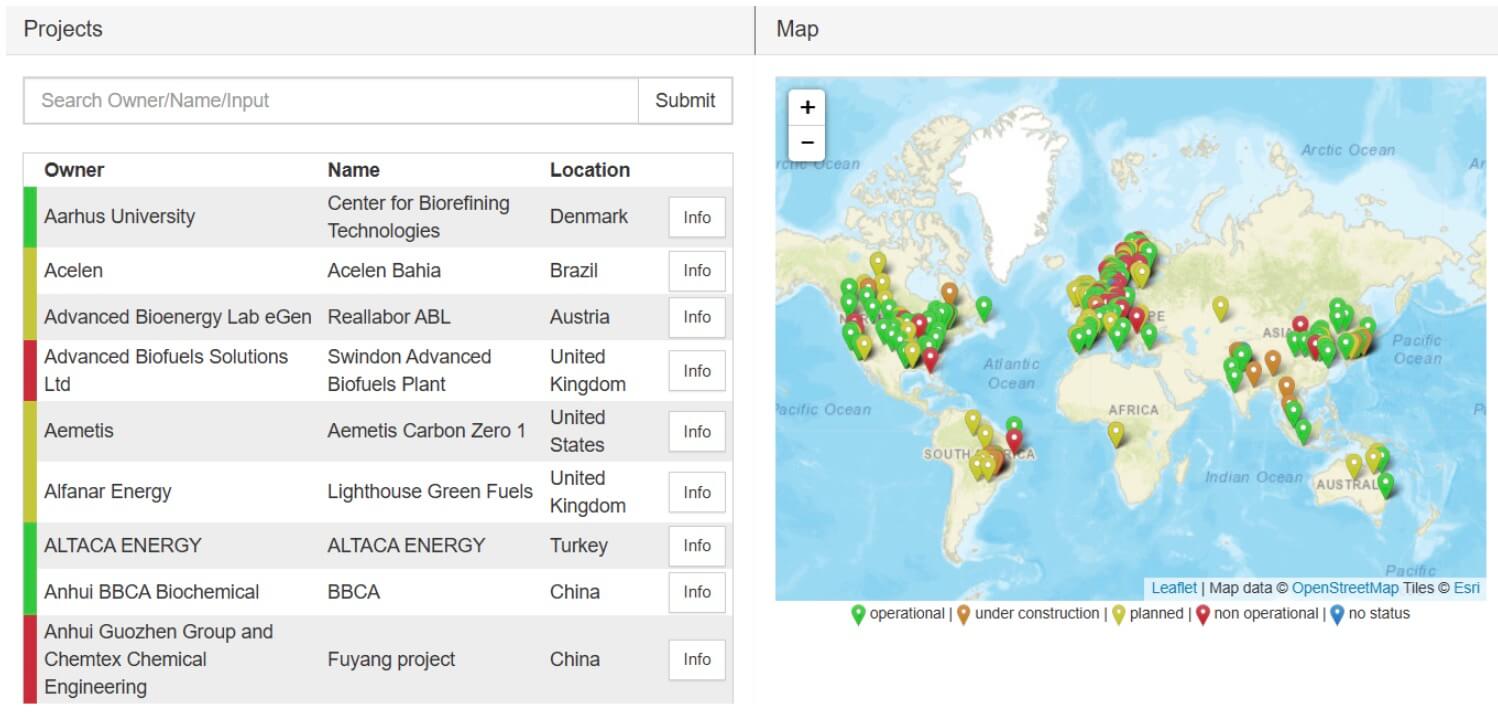
The IEA Bioenergy Task 39 Biofuels to decarbonize transport: Database on facilities for the production of advanced liquid and gaseous biofuels for transport presents information on advanced biofuel pilots and production from across the globe.
Biofuel bunkering map
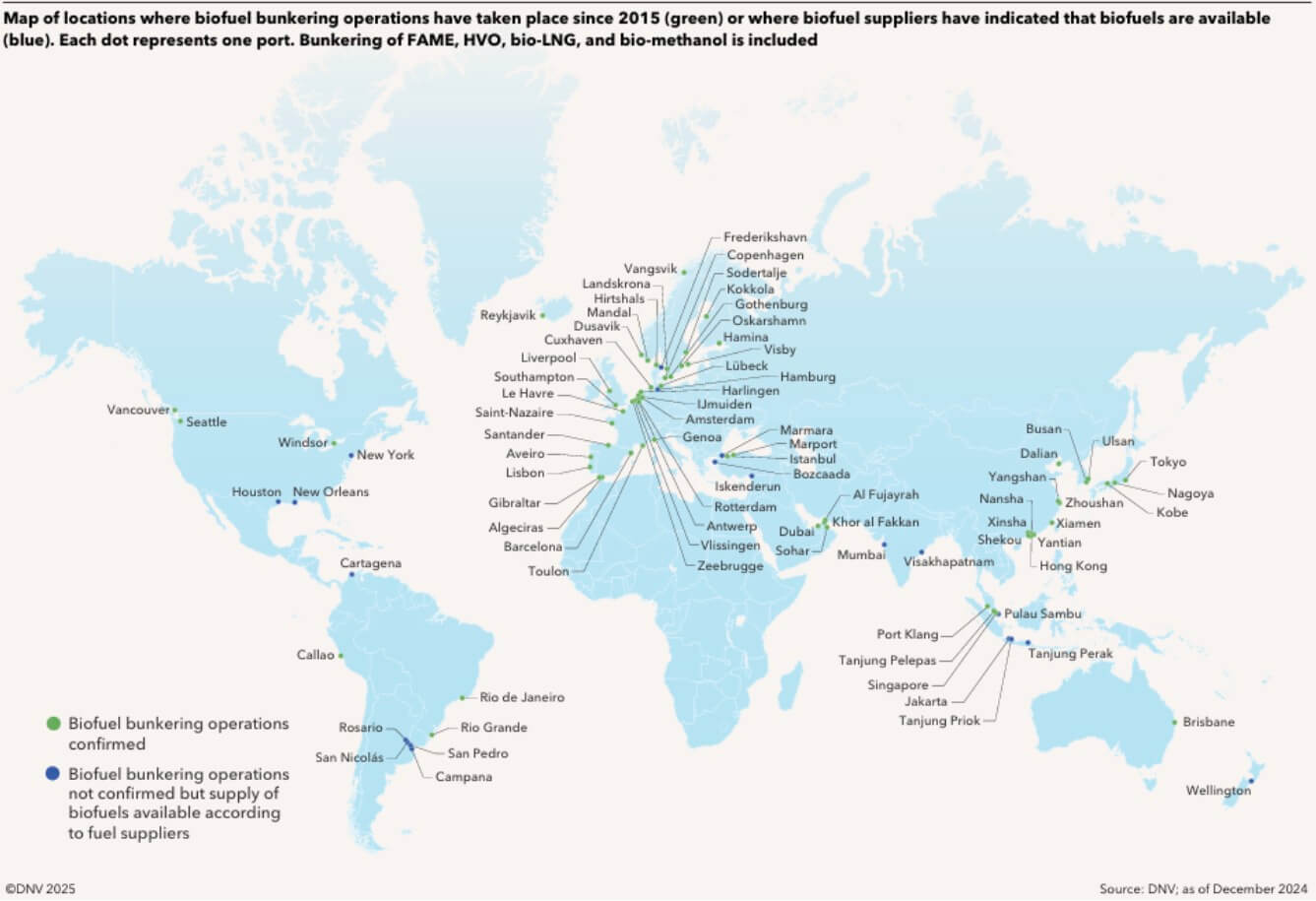
Read more in the DNV white paper: Biofuels in Shipping – Current market and guidance on use and reporting
Safety
You can find information on the latest IMO regulations and guidelines related to biofuel products on the FFT Safety page, particularly:
External biofuels safety resources
The EMSA Guidance for safe bunkering of biofuel, includes checklists for different bunkering phases and configurations, informed by an EMSA study series to address a gap in standardization of procedures for marine bunkering of biofuel.